Play, Learn, Thrive - Together |
|
Email: swfinance@swons.co.uk |

Early Years Curriculum
A guide for parents and staff to what your child learns at South Wonston Day Nursery, written in the language of the Early Years Foundation Stage (EYFS) and in line with Hampshire County Council guidance.
1. About our curriculum
Our curriculum follows the EYFS, the Government framework every nursery in England must use for children from birth to five. It builds on what your child is interested in, so they learn through play they choose, with skilled adults helping them take the next step.
Our aim: every child leaves us happy, confident and ready for the next stage of learning, including starting school.
What we want for every child
The EYFS says it seeks to provide:
• Quality and consistency — so every child makes good progress and no child gets left behind.
• A secure foundation — learning planned around each child’s individual needs and interests.
• Partnership working — between practitioners and with parents and carers.
• Equality of opportunity — every child is included and supported.
What “following your child’s interests” means
The EYFS asks practitioners to consider the individual needs, interests and development of each child when planning. So if your child loves diggers, we might count diggers, read a digger story, make tracks in the sand and learn new words like scoop and heavy. They are learning maths, language and physical skills through something they care about. This is balanced with activities adults lead, such as story time and small group games. As children get older, adult-led activities increase to help prepare them for school.
2. The EYFS explained
We follow the EYFS statutory framework for group and school-based providers, updated by the Department for Education in July 2026 and in force from 1 September 2026. We use the Department for Education’s Development Matters guidance to check children’s progress. The September 2026 update did not change what children learn: the seven areas of learning, Early Learning Goals and assessment stay the same. The changes are about keeping children safe and well, and are explained in section 9.
The four guiding principles
|
EYFS principle |
What it means for your child |
Example at nursery |
|
A unique child
|
Every child is constantly learning and can be resilient, capable, confident and self-assured |
We learn your child’s routines, words for things and favourite activities before they start |
|
Physical Development
|
Children learn to be strong and independent through positive relationships |
Your child has a key person who greets them, comforts them and shares their day with you |
|
Enabling environments |
Children learn and develop well in environments that respond to their individual needs, with a strong partnership between practitioners and parents |
Toys and resources at child height, so your child can choose; indoor and outdoor play every day |
|
Learning and development |
Children develop and learn at different rates |
We plan next steps for your child, not a one-size-fits-all timetable |
The seven areas of learning
The EYFS groups learning into seven areas. The first three are prime areas: they are especially important for igniting curiosity and enthusiasm for learning, and for building children’s capacity to learn, form relationships and thrive.
|
Prime areas |
Specific areas |
|
Communication and Language |
Literacy |
|
Physical Development |
Mathematics |
|
Personal, Social and Emotional Development |
Understanding the World |
|
|
Expressive Arts and Design |
The four specific areas strengthen and build on the prime areas. With babies and toddlers we focus mostly on the prime areas.
Characteristics of effective teaching and learning
The EYFS describes three ways children learn best. We look for these every day.
|
Characteristic |
What it means |
Example you might see |
|
Playing and exploring
|
Children investigate and experience things, and “have a go” |
Your child pours water between jugs to see what happens |
|
Active learning
|
Children concentrate, keep on trying if they have difficulties, and enjoy achievements |
Your child keeps rebuilding a tower that falls, then cheers when it stands |
|
Creating and thinking critically |
Children have and develop their own ideas, make links between ideas, and develop strategies for doing things |
Your child decides a box can be a boat and finds a stick for an oar |
EYFS words you may hear
|
Word |
Plain meaning |
|
Key person |
The practitioner responsible for your child’s care and learning, and your main contact |
|
Next steps |
What we will help your child learn next |
|
Early Learning Goals (ELGs) |
The expected level of development by the end of the Reception year at school |
|
Progress check at age two |
A short written summary of your child’s development between ages 2 and 3 |
|
Ongoing (formative) assessment |
Watching and listening to your child to understand what they know and can do |
|
Child-initiated / adult-led |
Play your child chooses / activities an adult plans and leads |
3. How children learn with us
Children learn mainly through play, in an enabling environment, supported by adults who know them well
An enabling environment
• Natural and real-life resources — wooden blocks, pine cones, shells, real pots and pans, fabric, so children can explore with all their senses.
• Calm, well-organised rooms — resources at child height and clearly stored, so children can choose and tidy up independently.
• Continuous provision — areas always available, such as the book corner, home corner, sand, water, construction and mark-making.
• Outdoor learning every day — digging, planting, climbing, mud kitchen play and den building, in all weathers.
How we plan for your child
We follow a simple cycle, which is how the EYFS expects practitioners to use ongoing assessment:
|
1. Observe |
2. Assess |
3. Plan |
4. Teach |
|
What your child does
|
What they are learning |
Next steps and resources |
Through play and interaction, then observe again |
Example: your key person notices your child trying to fasten their coat. They show them how to hold the zip, practise with a dressing-up jacket in play, and share the next step with you so you can practise at home.
What the adults do
The EYFS explains that teaching in the early years happens in lots of small, everyday moments. Here is what that looks like when our practitioners play alongside your child:
• Communicate and model language — chatting with your child throughout the day and sharing new words. For example, while splashing in puddles: “Splish, splash! Your wellies are making big ripples.”
• Show, explain and demonstrate — showing how to do something one small step at a time. For example, “Watch me: I hold the jug with two hands and pour slowly so the water stays in the cup.”
• Encourage exploration — sparking curiosity with gentle questions. For example, at the water tray: “Do you think the pine cone will float or sink? Let’s try!”
• Help children solve problems — giving just enough help so your child can do it themselves. For example, when a tower keeps toppling: “Hmm, which blocks could go at the bottom to make it strong?”
• Set challenges — offering safe, supervised challenges that build confidence. For example, walking along a low balance beam, climbing the steps to the slide, or helping to dig in the garden with child-sized tools.
• Describe what children are doing — talking about your child’s play as it happens, so they hear the words for their actions. For example, “You’re rolling the playdough into a long, wiggly snake!”
Child-initiated and adult-led learning
The EYFS says each area of learning should be implemented through a mix of adult-led and child-initiated activity, with more adult-led activity as children move towards Reception.
|
Age group |
Child-initiated play |
Adult-led activities (examples) |
|
Under 2s
|
Most of the day, through play and care routines |
Songs, rhymes and sharing books one-to-one |
|
2-year-olds |
Most of the day |
Short small-group stories, songs and language games (about 5–10 minutes) |
|
3 and 4-year-olds |
Most of the day |
Daily group times for listening, early sounds, number and stories (about 10–20 minutes), increasing before school |
4. The seven areas of learning
Each area is split into the aspects named in the EYFS Early Learning Goals. We use the Development Matters age bands, Birth to three and Three and four-year-olds, to show what your child might be doing. These are a guide only: every child develops at their own rate.
Communication and Language (prime area)
The EYFS says the number and quality of conversations children have with adults and peers throughout the day are crucial.
|
Aspect |
Birth to three: you might see |
Three and four-year olds: you might see |
At nursery we… |
At home you could… |
|
Listening, Attention and Understanding
|
Your baby turns to a familiar voice; your toddler follows “get your shoes” |
Your child listens to a story in a small group and answers “why” questions |
Share stories, songs and rhymes every day |
Turn off the TV and chat during meals |
|
Speaking |
Babbling, first words, then two-word phrases like “more juice” |
Talking in sentences, e.g. “I went to the park and saw a squirrel” |
Introduce new words linked to play, e.g. enormous, slippery |
Talk about what you’re doing: “I’m cutting the apple in half” |
Personal, Social and Emotional Development (prime area)
|
Aspect |
Birth to three: you might see |
Three and four-year olds: you might see |
At nursery we… |
At home you could… |
|
Self-Regulation
|
Your child is comforted by their key person when upset |
Your child talks about feelings, e.g. “I’m cross because he took my car” |
Name feelings and help children calm down |
Read books about feelings and name them together |
|
Managing Self |
Trying to feed themselves with a spoon |
Putting on their own coat; knowing to wash hands before eating |
Build independence into snack, dressing and tidy-up |
Let your child try small jobs, like putting shoes on |
|
Building Relationships |
Playing alongside other children |
Taking turns and playing with friends in a shared game |
Model sharing and turn-taking in games |
Play simple turn taking games like rolling a ball |
Physical Development (prime area)
|
Aspect |
Birth to three: you might see |
Three and four-year olds: you might see |
At nursery we… |
At home you could… |
|
Gross Motor Skills
|
Rolling, crawling, walking, climbing onto low steps |
Running, jumping, balancing, pedalling a trike, climbing |
Offer daily outdoor play with climbing and balancing |
Visit the park and play ball games |
|
Fine Motor Skills |
Picking up small food with finger and thumb; making marks with chunky crayons |
Using scissors; holding a pencil to draw a person |
Provide dough, tweezers, paint brushes and markmaking tools |
Play with playdough, peg clothes on a line, draw together |
We also teach healthy habits: brushing teeth, hand-washing, healthy eating, being active and good sleep.
Literacy (specific area)
|
Aspect |
Birth to three: you might see |
Three and four-year olds: you might see |
At nursery we… |
At home you could… |
|
Comprehension
|
Enjoying looking at books and pointing at pictures |
Retelling a favourite story and predicting what happens next |
Read and reread a core set of high quality books |
Read a bedtime story every night and ask “what happens next?” |
|
Word Reading |
Joining in with rhymes and repeated phrases |
Spotting their own name; noticing words that rhyme or start with the same sound |
Play rhyming and sound games |
Sing nursery rhymes and play “I spy” |
|
Writing |
Making marks in paint, sand or with a crayon |
Giving meaning to marks (“this says Mummy”); starting to write some letters of their name |
Offer clipboards, chalk and writing in role play |
Let your child “write” a shopping list with you |
Mathematics (specific area)
|
Aspect |
Birth to three: you might see |
Three and four-year olds: you might see |
At nursery we… |
At home you could… |
|
Number
|
Noticing “more” or “all gone”; saying some counting words |
Counting objects one at a time; seeing how many up to 5 without counting |
Count in real life: children at snack, steps outside |
Count stairs, grapes or cars together |
|
Numerical Patterns |
Lining up toys; exploring shapes by fitting them in containers |
Making repeating patterns; comparing “bigger” and “smaller”; using words like under and next to |
Make patterns with natural objects and play shape games |
Spot shapes and patterns on a walk |
Understanding the World (specific area)
|
Aspect |
Birth to three: you might see |
Three and four-year olds: you might see |
At nursery we… |
At home you could… |
|
Past and Present
|
Recognising family members in photos |
Talking about when they were a baby; noticing how people and things change |
Share family photo books |
Look at old photos together |
|
People, Culture and Communities |
Noticing people around them |
Talking about their family, local community and different festivals |
Celebrate festivals from our families; take walks around South Wonston |
Visit local places: the shop, library, church, or park |
|
The Natural World |
Exploring leaves, water and sand with their senses |
Noticing seasons, growing plants, describing what they see |
Plant, grow, hunt for minibeasts, watch the weather |
Plant seeds on a windowsill; collect autumn leaves |
Expressive Arts and Design (specific area)
|
Aspect |
Birth to three: you might see |
Three and four-year olds: you might see |
At nursery we… |
At home you could… |
|
Creating with Materials
|
Exploring paint and textures with hands |
Choosing materials to build or make something, e.g. a rocket from boxes |
Offer paint, clay, collage and junk modelling |
Keep a box of cardboard tubes, boxes and tape |
|
Being Imaginative and Expressive |
Moving to music; copying actions in songs |
Acting out stories; singing songs from memory; making up their own songs |
Provide dressing-up, role play and music every day |
Sing and dance together; join in pretend play |
Cultural capital
Ofsted expects nurseries to widen children’s experiences, particularly for those who might not otherwise have them. At South Wonston this includes local walks, visits from people who help us, cooking, gardening, live music and a love of books.
5. Your child’s day and year
Learning happens all day, 8.00am–6.00pm, 50 weeks a year: nappy changes, meals, sleep and play are all chances to learn.
Rooms and ratios
The EYFS sets the minimum number of adults for each age group. These are the minimums we meet or exceed.
|
Group |
Age |
Minimum ratio (EYFS) |
Curriculum emphasis |
|
Babies |
0–2 years
|
1:3 |
Prime areas: feeling secure, early talk, movement, exploring with the senses |
|
Toddlers |
2–3 years |
1:5 |
Prime areas: talking, independence, physical confidence |
|
Preschool |
3–5 years |
1:8 |
All seven areas and getting ready for school |
A typical day
|
Time |
What happens |
EYFS areas your child is learning in |
|
8.00–9.00
|
Welcome and settling into play |
Personal, Social and Emotional Development |
|
9.00–9.15 |
Hello time: songs, weather, who’s here |
Communication and Language; Mathematics |
|
9.15–10.30 |
Free play indoors and outdoors |
All seven areas, led by interests |
|
10.30–10.45 |
Snack |
Managing Self; Speaking |
|
10.45–11.45 |
Outdoor learning and small group time |
Physical Development; Understanding the World |
|
11.45–12.30 |
Lunch together |
Managing Self; Building Relationships |
|
12.30–2.00 |
Rest or sleep, following your child’s routine; quiet play |
Self-Regulation |
|
2.00–3.30 |
Free play and planned activities |
Expressive Arts and Design; Literacy |
|
3.30–4.00 |
Tea |
Managing Self; Building Relationships |
|
4.00–5.30 |
Outdoor play, stories and music | Physical Development; Literacy |
|
5.30–6.00 |
Calm play and home time | Communication and Language |
Babies follow their own feeding and sleep routines from home. Sleeping children are always within sight and hearing of staff, following the EYFS safer sleep requirements (see section 9).
Outdoor learning
Children go outside every day, in all weathers. Please send suitable clothes: waterproofs and wellies in wet weather, a sun hat and suncream in summer.
Screens and technology
The EYFS now requires nurseries to have regard to the Department for Education’s screen use guidance for early years settings. It says screen use should be avoided for under twos and limited to up to an hour a day for children aged two to five.
|
Age |
At nursery |
At home you could… |
|
Under 2s
|
No screens. Babies learn through faces, voices, touch and play |
Keep screens away during feeds, play and bedtime |
|
2 to 5-year-olds |
Very little screen use, only with an adult and for a purpose, such as looking up a photo of a minibeast we found |
Watch together and talk about it; keep screens out of bedrooms and mealtimes |
Children still learn about technology through real objects: torches, magnifying glasses, toy cameras, and seeing how a till or washing machine works in role play.
Our year
We use the seasons, local events and families’ celebrations as starting points, then follow where children’s interests lead.
|
Term |
At nursery |
|
Autumn
|
Settling in, autumn leaves, harvest, Bonfire Night safety, Diwali, Remembrance, winter festivals |
|
Spring |
Lunar New Year, planting seeds, Mother’s Day, Easter and new life, Eid when celebrated by our families |
|
Summer |
Growing food, minibeasts, sun safety, Father’s Day, sports day, getting ready for school |
6. Your child’s key person and progress
The EYFS says every child must be assigned a key person, whose role is to help ensure each child’s care is tailored to their needs and to build a relationship with their parents.
What your key person does
• Helps your child settle and feel safe.
• Gets to know your child’s interests and what they can do.
• Plans next steps and shares them with you.
• Is your main contact, and helps you find extra support if it’s needed.
How we check progress
The EYFS says assessment should not take practitioners away from interacting with children, or require excessive paperwork. We only record what is useful.
|
When |
What happens |
What you receive |
|
Before your child starts
|
You tell us about routines, interests and what they can already do |
An “All about me” form to complete |
|
First six weeks |
Your key person gets to know your child |
A settling-in chat |
|
Every day |
Ongoing (formative) assessment: watching, listening and playing |
A quick handover and occasional photos and notes |
|
Each term |
A short summary of progress in the prime areas (and specific areas for older children) |
A parent meeting and next steps |
|
Between ages 2 and 3 |
Progress check at age two: a written summary of progress in Communication and Language, Physical Development, and Personal, Social and Emotional Development |
A copy to keep; we encourage you to share it with your health visitor for the 2-year review |
|
Before school |
Transition information about your child’s learning and interests | A copy of what we share with the school |
If we notice your child needs more help
If your child is not making the expected progress, we will talk with you first. Together we agree how to help, and may involve our SENCo or other professionals (see section 7).
7. Including every child
Every child is welcome and supported to take part fully, including children with special educational needs and disabilities (SEND) and children learning English as an additional language.
Special educational needs and disabilities (SEND)
The EYFS requires nurseries to have arrangements in place to support children with SEND. We follow the SEND Code of Practice: 0 to 25 years and Hampshire County Council’s SEN Support Guidance for Early Years Providers
How it works for your child:
1. Assess — we talk with you about what your child finds tricky and what helps.
2. Plan — we agree small, clear targets, e.g. “Mia will use two words to ask for a snack”.
3. Do — we build support into everyday play, e.g. picture cards, signing, quieter spaces.
4. Review — we meet with you regularly to see what’s working.
Our SENCo (special educational needs coordinator) leads this and can involve outside professionals, such as speech and language therapists or health visitors.
Support from Hampshire County Council
|
Hampshire support |
What it is |
How it helps your child |
|
Services for Young Children (SfYC) Inclusion Team
|
Hampshire’s early years advisers for SEND and inclusion |
Advice and training for our staff to meet your child’s needs |
|
SEN Inclusion Funding (SEN IF) |
Extra funding the nursery can apply for |
Pays for additional support for eligible children with SEND attending funded early years education |
|
Early Years Specialist Hub Provision |
Specialist nursery places for children under five with significant and complex SEND, allocated each term by a Pre-school Advisory Group (PAG) |
For children who need more than a mainstream nursery can offer; local hubs serve Winchester and Eastleigh |
|
Hampshire SEND Local Offer |
Information on Hampshire’s services for children with SEND, found through the Family Information and Services Hub (FISH) |
Helps you find support, groups and advice |
Children learning English as an additional language
The EYFS asks nurseries to give children opportunities to develop and use their home language in play and learning, while making sure they reach a good standard of English before Reception.
• We ask you for key words in your home language.
• We welcome books and songs in your home language.
• We use pictures, gestures and repetition to support English.
Extra funding for children who need it
• Early Years Pupil Premium — extra money the nursery receives for eligible children, used for things like additional language support or outdoor experiences.
• Disability Access Fund — a yearly payment to the nursery for eligible children receiving Disability Living Allowance, to make reasonable adjustments.
Please speak to the Nursery Manager in confidence if you think your child may be eligible.
8. Working together with parents
You know your child best. The EYFS calls this a strong partnership between practitioners and parents, and it makes the biggest difference to your child’s learning.
How we keep you involved
• Daily chats at drop-off and collection about sleep, meals and a learning moment.
• Photos and notes about your child’s learning, and we love hearing about “wow” moments at home.
• Termly meetings with your key person to talk about progress and next steps.
• Home learning ideas such as story bags and simple activities (see the “At home you could…” column in section 4).
• Stay-and-play sessions and workshops, for example on talking, toilet training and starting school.
• Your feedback through surveys and conversations, which helps us improve.
Funded early years education in Hampshire
We are a Hampshire County Council approved provider of Early Years Education (EYE) funding. Funding starts in the funding period after your child’s eligible birthday: 1 January, 1 April or 1 September.
|
Funded hours |
Who can get it |
|
Universal entitlement: up to 570 hours a year (about 15 hours a week, term time) |
All 3 and 4-year-olds |
|
Working Families Entitlement: up to 1,140 hours a year (about 30 hours a week, term time) |
Eligible working families with children from 9 months old; you must reconfirm eligibility with HMRC every three months |
|
Early Learning for 2-Year-Olds: up to 570 hours a year |
Eligible 2-year-olds, e.g. families receiving certain benefits |
The Hampshire Family Information and Services Hub (FISH) has details on funding and local family services, and the Government’s Childcare Service helpline is 0300 123 4097. Ask us if you’d like help with your eligibility code.
Moving on: transitions
|
Change |
How we help |
|
Starting nursery |
A visit before starting, flexible settling-in sessions and an “All about me” form |
|
Moving rooms |
Visits with your key person, a gradual move, and we tell you in advance |
|
Attending another setting too |
With your permission, we share your child’s interests and next steps |
|
Starting school |
School role play, trying on uniform, photos of the new school, Reception teacher visits and a written transition summary |
9. Keeping children safe and checking our curriculum works
Children learn best when they feel safe, so safeguarding and welfare come first, and we review this curriculum every year.
Safeguarding and welfare
• We meet the EYFS safeguarding and welfare requirements, including safer recruitment, a trained Designated Safeguarding Lead (DSL), and paediatric first aid cover.
• We follow the procedures of the Hampshire Safeguarding Children Partnership and refer concerns to Hampshire Children’s Services when needed.
• The EYFS requires us to respect children’s privacy during nappy changing and toileting.
• Meals and snacks are healthy, balanced and nutritious, and we record allergies and dietary needs before your child starts.
What changed in the EYFS from 1 September 2026
The Department for Education published updated EYFS frameworks on 13 July 2026. Ofsted has used its updated early years inspection toolkit since 1 September 2026. Here is what the changes mean at South Wonston Day Nursery.
|
EYFS change |
What it means for your child |
What we do |
|
Safer sleep requirements are now written into the EYFS itself
|
Your child sleeps safely, in a way that follows the national rules |
Sleeping children are always within sight and hearing of staff; babies are put down to sleep safely, and sleep is checked and recorded |
|
Screen use: nurseries must have regard to the DfE screen use guidance |
Under twos avoid screens; 2 to 5 year-olds have very limited screen time |
See “Screens and technology” in section 5 |
|
Enhanced DBS checks for all volunteers, including supervised volunteers |
Every adult helping in the nursery has been properly checked |
Volunteers, students and parent helpers have an enhanced DBS check before they help |
|
No new staff start before their DBS check is received |
Only checked adults work with your child |
New staff do not begin work until their enhanced DBS certificate has come back |
|
Suitability disclosures updated |
Staff tell us about anything that could affect their suitability to work with children |
Staff are told exactly what they must disclose, at interview and in supervision |
|
Lower threshold for reporting allegations: Ofsted must be told about allegations of harm, not only serious harm |
Concerns are taken seriously and reported early |
We inform Ofsted of any allegation of harm by anyone working or looking after children here, and follow Hampshire safeguarding procedures |
|
Banned dog breeds may not be kept or present on childcare premises |
Your child is protected from dangerous dogs |
No banned breed dog is allowed on our premises at any time; please do not bring one to drop-off or collection |
These changes are reflected in our safeguarding, recruitment, safer sleep and screen use policies, which parents can ask to see at any time.
How we know the curriculum is working
• Children are happy, settled and involved in their play.
• Children make good progress from their starting points, including children with SEND and those receiving extra funding.
• Children use the new words and skills they’ve learned.
• Parents tell us their child is sharing learning at home.
• Schools tell us children are ready for Reception.
How we check and improve
|
What we do |
How often |
Who |
|
Check each room is an enabling environment |
Every half term |
Nursery Manager |
|
Watch and support staff interactions with children |
Every term |
Nursery Manager and room leaders |
|
Review children’s progress across the nursery |
Every term |
Nursery Manager and SENCo |
|
Supervision meetings for staff (an EYFS requirement) |
At least every term |
Line manager |
|
Staff training, including Hampshire SfYC courses |
Throughout the year |
Nursery Manager |
|
Review this curriculum with staff and parents |
Every year |
Nursery Manager |
Useful sources
• Department for Education, EYFS statutory framework for group and school-based providers (updated July 2026, in force from 1 September 2026)
• Department for Education, Development Matters
• DfE and DHSC, SEND Code of Practice: 0 to 25 years
• Hampshire County Council, Services for Young Children: hants.gov.uk
• Hampshire Family Information and Services Hub (FISH): connecttosupporthampshire.org.uk

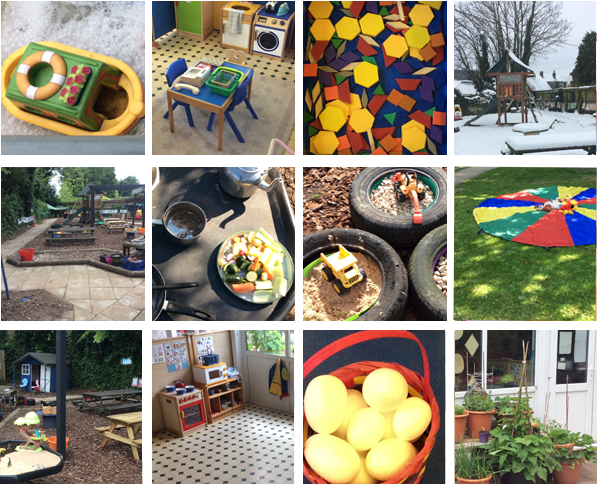
Our Gallery
| LOCATIONSouth Wonston Day Nursery Tel: 07873436061 Manager Email: manager-swdn@swons.co.uk | ENQUIRY FORM |